 Skip to content


Hair fall and hair thinning are problems that many of us face. And let’s be honest, almost all of us have spent several years and money to get voluminous hair, but how many of us have really achieved it?
No more worries, just a few changes to your diet and hair care routine can help you out. As we bring to you The Traya Hair Treatment: A threefold way to keep your hair fall at the bay!
When you start with Traya, our hair experts help you by providing a personalized Traya Hair treatment that combines the goodness of three sciences: Ayurveda, Dermatology, and Nutrition.
Encompassing these three sciences into a powerful hair loss control solution, our experts give you the best shot at controlling your hair-related problems. Therefore, instead of spending money on individual products or experimenting with hair remedies, do yourself a small favor - Try Traya Hair Kit Now!
This Traya Hair Kit, is prescribed by doctors and customised for you as per your hair and scalp needs. It consists of:
-
Ayurvedic Components - Hair Ras, Gutt Shuddhi, Health Tatva, Nasal Grit, and Scalp Oil
-
Dermatological components - Hair Root Serum, Anti - Dandruff Shampoo, Anti Dandruff Lotion, and Minoxidil.
What’s in Your Traya Hair Kit – And Why It Matters
Every product in your Traya hair Kit has a specific role in your hair growth journey. Unlike generic treatments, Traya takes a root-cause approach, meaning each product works together to address why you’re losing hair, not just the symptoms.
|
Product |
Why It’s Prescribed |
|
Ayurvedic Tablets |
Helps balance doshas, improves digestion, and reduces internal stress, which are key triggers for hair loss. |
|
Minoxidil 5% |
Reactivate dormant hair follicles and boosts blood circulation to the scalp, promoting regrowth. |
|
Anti-Dandruff Shampoo |
Treats dandruff and scalp infections, creating a healthier scalp environment for better absorption of other treatments. |
|
Scalp Lotion |
Soothes scalp inflammation, strengthens follicles, and improves scalp hydration. |
|
Supplements (Iron, B12, Vitamin D) |
Addresses nutritional deficiencies that weaken hair and cause excessive shedding. |
Traya’s approach is holistic, these products don’t work in isolation. Instead, they are designed to complement each other, ensuring that your Traya Hair treatment is effective from the inside out. Consistency is key, and when used as prescribed, they create the ideal conditions for stronger, healthier hair growth.
Here is a complete guide on how to use The Traya Hair kit for customized solutions.
How to use the Customized Traya Scalp Oil
Based on your scalp health and stage of hair loss, we customize your scalp oil.
You need to use this three times a week. Gently massage your scalp with customized hair oil, keep it overnight, and wash it off. But if you have dandruff issues or oily scalp, keep it only for an hour and then wash it off.

What does it do
-
Maintains your scalp pH
-
Stimulating your hair follicle
-
Dandruff control
-
Improves your hair thickness
Hair Vitamin
Based on your body’s vitamin and mineral requirements, our experts will prescribe you the dosage of hair vitamins.

What does it do
-
Regulates blood flow
-
Repairs hair growth tissues
-
Improvises hair thickness
-
Helps in generating new hair growth cells
Redensyl Serum
Evaluating your scalp condition, Traya experts might have prescribed using Redensyl twice a day: once in the morning and once in a night. While applying Redensyl solutions fill the dropper to 1 ml and apply the drops to the affected areas for best results.

What does it do
-
Promotes regrowth
-
Prevents hair loss
-
Maintains scalp health
-
Improves hair thickness
Minoxidil
Targets root causes of hair thinning, receding hairline and hair fall such as shrinking of hair follicles due to DHT, poor blood flow to hair follicles and undernourished hair follicles. Apply it on a clean and dry scalp on the affected areas. Do not rinse the scalp after applying. Dosage as prescribed by Traya doctors.

What does it do
-
Works by prolonging the growth phase of the hair cycle
-
Promotes blood flow to the scalp
-
Increases hair thickness
-
Reverses follicle shrinkage
Traya Shampoo
Based on your scalp condition, we customize your shampoo. Use Traya Shampoo twice a week for best results. Also, our experts prescribe Anti-dandruff shampoo to be used three times a week if you have dandruff issues.

What does it do
-
Maintains your scalp pH
-
Stimulating your hair follicle
-
Dandruff control
-
Improves your hair thickness
Traya Ghrit
You need to use Traya Ghrit before you sleep at night. A good position to apply drop into nostrils is to elevate your head slightly. Put 3 drops into each nostril for best results.

What does it do
-
Reduces Stress
-
Improves brain activity
-
Builds Immunity
-
Aids in Sleep
Health Tatva
Health Tatva is plant based, herbal, ayurvedic mix that brings about internal balance by targeting your metabolism. It contains herbs that boosts immunity, balances pitta dosha, reduces brain fog and controls blood sugar levels. It is recommended to take the tablets after meals with water. The bottle contains 60 tablets and will last for a month.

What does it do
-
Boosts metabolism
-
Detoxifies the body
-
Absorbs the essential nutrients
-
Delays premature greying of hair
Gutt Shuddhi
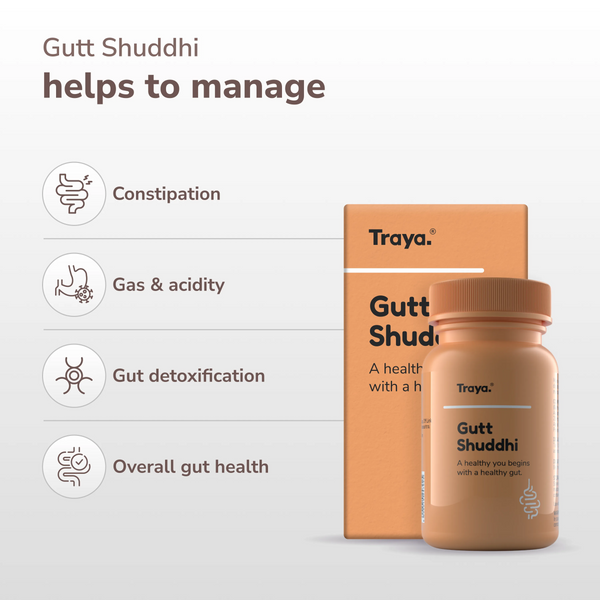
These plant based digestion tablets, consists of ayurvedic herbs for improved gut health and are important in providing relief from gut problems such as gas, constipation and acidity. It is recommended to take the tablets after meals with water. The bottle contains 30 tablets and will last for a month.
What does it do
-
Increases good bacteria in the gut
-
Relieves constipation and gas
-
Regulates bowel movements
-
Rejuvenates the hair and skin health
Hair Ras
Nourishes hair internally with essential supplements with a formulation of rare and effective Ayurvedic herbs. Targets poor hair follicle health, dosha imbalance and poor blood flow to the scalp. It is recommended to take the tablets after meals with water. The bottle contains 120 tablets and will last for a month.

What does it do
-
Improves hair quality
-
Stimulates Hair growth
-
Relieves stress
-
Delays premature greying
Your Traya Daily Routine – Step by Step
Taking care of your hair shouldn’t feel like a chore. The Traya hair treatment is designed to be quick and effective, taking just two minutes in the morning and two minutes in the evening to stay on track. Rest, the oiling and shampooing will just take as much time as it used to for you!
Morning Routine (2 Minutes)
-
Take your Ayurvedic tablets and supplements to support internal healing and strengthen follicles.
-
Apply Minoxidil or scalp lotion if prescribed to stimulate hair growth and nourish the scalp.
-
Massage for a few seconds to improve absorption and boost circulation.
Evening Routine (2 Minutes)
-
Wash your scalp with the anti-fungal shampoo if needed to keep it clean and healthy.
-
Apply night-time scalp lotion or oil as per your plan to hydrate the scalp and strengthen roots.
-
Gently massage to encourage relaxation and improve blood flow to follicles.
That’s all it takes, just four minutes a day for stronger, healthier hair. Stick to the routine, and you will see the difference over time.
How Much is the Traya Hair Kit price?
Traya’s hair kit ranges monthly from 1800rs - 3000rs. The cost is decided by the kind of hair condition the user is facing. Your timeline of using might vary from 5 to 9 months depending on your hair concerns.
And you might ask why invest so much for 5-9 months straight?
So basically, Traya prepares a holistic hair kit for treatment ,that includes supplements, serums, shampoo, and any other product if required. Traya's Hair kit is prescribed by our dermatologists, and everything about the Traya Hair treatment is guided by our hair coaches.
To read more about this in Detail, read: Traya Hair Kit Price: Traya Hair Treatment Cost Breakdown
Consistency = Results: Backed by Traya’s Clinical Data
When it comes to hair regrowth, consistency is the only way to go. A clinical study involving 1,200 men (ages 21–40, experiencing Stages 1–4 hair loss) revealed that those who followed their personalized Traya plan without interruption saw significantly better results:
-
3X better hair density compared to those using only Minoxidil 5%.
-
Visible regrowth by month 4, with new baby hairs filling in thinning areas.
-
Reduced hair fall within 6–8 weeks, leading to stronger, healthier strands.
The science is clear, every skipped day slows down progress, while every consistent week brings you closer to noticeable hair growth. Traya’s plan works when followed as designed, ensuring long-term, sustainable results.
Conclusion
A holistic approach to hair loss is the right way to go because hair loss is a combination of multiple factors. We bring you the Traya Hair treatment that is expert-curated, safe and guarantees results or you get a full refund.
People Also Ask
What if I forget a dose?
Missing a single dose won’t harm your progress, but consistency matters. Take it as soon as you remember, but never double the dose to make up for a missed one.
Can I use Minoxidil on wet hair?
No, Minoxidil should only be applied to a clean, dry scalp. Applying it on wet hair can dilute its effectiveness and reduce absorption.
Will the shampoo make my hair dry?
Traya’s shampoo is sulfate-free and dermatologically tested to be gentle. However, if your hair feels dry, pair it with a mild conditioner or use a hydrating hair oil.
How long before I see results?
While scalp health improvements like reduced dandruff and less hair fall start early, visible regrowth typically begins around month 4 with consistent use.
Can I stop once I see results?
Hair health is an ongoing process. Stopping the Traya Hair treatment suddenly can slow progress or lead to hair fall returning. Always consult your Traya hair coach before making changes.
Find the Best Hair Doctor near you


Read More Blogs

Real Success Stories: Hair Regrowth Naturally with Traya’s Approach
Hair loss isn’t just about hair. It’s about how you feel when you look in the mirror. I...

Best Hair Growth Oil Recommended by Doctors in India
Summary Hair fall is one of the common concerns faced by Indians, followed by other rel...

Can pitta dosha cause hair fall?
4 min read

Best Shampoos for Dry and Frizzy Hair: Dermatologists' Picks in India (2025)
Dry and frizzy hair is more than just a cosmetic concern — it's a sign that your hair l...

Top Oils Backed by Science for Hair Regrowth
If you're looking for the best hair growth oil recommended by doctors, chances are you'...


