 Skip to content


Are you thinking about using minoxidil for hair loss? You’re not alone. This medication can come in handy if you’re facing problems like receding hairline, hair thinning and loss, and pattern baldness, specifically androgenetic alopecia. We understand that starting a new hair treatment can be stressful, especially if you’re concerned about its side effects. While it works well for many people, it’s only natural to worry about them.
Most users experience only mild issues, such as scalp irritation or temporary shedding. Developed as a vasodilator to treat hypertension, minoxidil is commonly known to promote thicker hair follicles. But people do notice other side effects, such as mild itchiness, hair loss, hair growth in unwanted places, rare heart flutters, and palpitations. Rarely, it also causes swelling in the hands and legs.
Let’s quickly go over what you should know before getting started with minoxidil’s side effects. Also, know a few safe treatment options.
Androgenetic alopecia may occur in women with conditions like Polycystic Ovary Syndrome (PCOS) and in men with prostate-related issues. It can make certain hair follicles sensitive and shorten the hair growth cycle, turning lush locks into sparse strands, causing pattern baldness.
If you choose to fight back against pattern baldness, the most popular prescription is Minoxidil.
What Is Minoxidil?
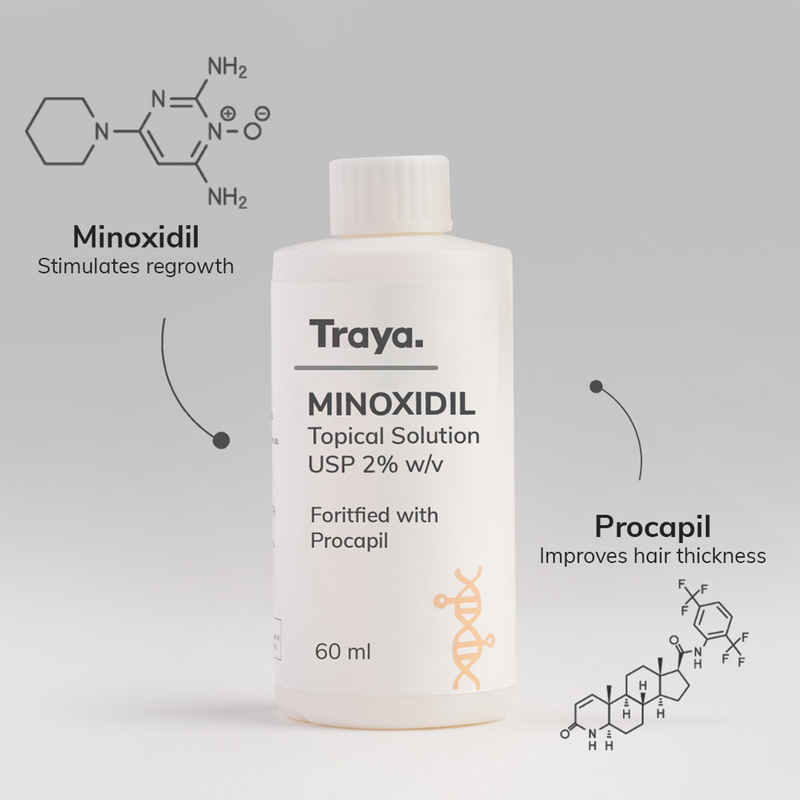
Minoxidil, also known as Rogaine, is a hair loss treatment. It comes as an over-the-counter liquid solution or foam (in 2% and 5% concentration, respectively). It is applied directly to the scalp to stimulate hair growth. There is also an FDA-approved oral tablet to keep your blood pressure in check. So, using oral minoxidil for hair loss is considered an off-label treatment.
How Does Minoxidil Work For Hair Growth?
You’ll be surprised to know that minoxidil was initially developed as a medication to treat high blood pressure. One of minoxidil’s side effects was hypertrichosis – excessive hair growth. Enzymes present in the skin and liver help metabolise minoxidil into minoxidil sulphate, which is required for it to be effective. It widens blood vessels to boost blood circulation, nudging the hair follicles into growth mode, and extending the hair growth phase.
Here’s a guide on how you can apply minoxidil to achieve the best results -
- Ensure your hair and scalp are dry.
- Use a dropper to measure exactly 1 ml of the minoxidil liquid solution.
- Apply it in the thinning areas of your scalp.
- Gently massage with your fingertips.
- Let it sit for a few hours before you wash your hair.
Does Minoxidil Have Side Effects?
Patience is the key when you apply minoxidil, or any other medication for that matter. It starts showing a difference in hair growth within four months, but in some cases, it takes several months to show any visible results. However, its effectiveness depends largely on individual skin and hair sensitivity, genetic predisposition, and diet and lifestyle choices.
Here’s what research says about minoxidil’s side effects.
The 5 Side Effects Of Minoxidil You Should Know About
1. Initial Hair Shedding
Your hair doesn’t grow at a steady rate - it goes through growth and resting phases. Minoxidil shortens the resting (telogen) phase and prolongs the growth (anagen) phase of the hair cycle. This keeps the follicles active for longer. However, you may face some hair loss in the initial days, as the hair follicles are shifting phases.
Consider this a sign that the treatment is working.
2. Scalp Irritation
If you’re experiencing a scratchy head, dandruff-like flakes, redness, and a burning sensation on the scalp, don’t worry! These are only a few mild side effects of this medication. The liquid topical minoxidil contains propylene glycol, a crucial ingredient that facilitates tissue absorption. However, this can cause the above-mentioned allergic reactions, in which case you may switch to a foam solution.
If the scalp irritation continues, then you may be allergic to minoxidil itself.
3. Unwanted Hair Growth
While minoxidil does promote hair growth, you may also encounter hair growth in unintended areas as one of its side effects. This unwanted hair can grow on the cheeks and chin.
This minoxidil side effect in women occurs if the solution comes in contact with other areas of the skin. It can be absorbed into the bloodstream and cause hair growth beyond the scalp.
4. Hair Texture Changes
Your hair texture may feel different during the initial months of treatment. If the new hair feels long, strong, and thick, the medication is working. But if it feels dry, brittle, or wavy, you should check with your doctor.
5. Rare Systemic Effects
Minoxidil mostly affects the skin. On very rare occasions, when the medications seep deeper into the body, it may lead to a faster or irregular heartbeat. Individuals may even experience chest pain, dizziness, rapid weight gain, and fainting.
The chances of this happening depend only on whether the mediation is absorbed in large amounts.
Oral Minoxidil Side Effects vs Topical Minoxidil
There is a fine line of difference between topical and oral minoxidil.
Topical minoxidil causes hair shedding, scalp irritation, and unwanted hair growth.
The above-mentioned systemic effects are associated with oral minoxidil, which is used to treat high blood pressure.
It circulates in your bloodstream and affects some organs, including your cardiovascular system. Oral minoxidil side effects also include water retention, leading to swelling of hands and legs, palpitations, low blood pressure, and headaches. If any of these symptoms occur, consult your doctor and stop using minoxidil.
The side effects of oral minoxidil will entirely depend on the dosage. Lower doses would expose you to fewer side effects.
Minoxidil Side Effects Sexually: Myth vs Reality
Many men and women ask if minoxidil has sexual side effects or if it works differently for each gender.
Research and real-world experience suggest that minoxidil is not associated with any such side effects.
These conditions are more commonly associated with medications such as Finasteride. It is another oral medication used to treat male-pattern baldness. But it comes with a few side effects, such as erectile dysfunction or reduced libido.
However, if you experience any unusual symptoms after starting treatment, consult a healthcare professional.
How to Reduce Or Prevent Minoxidil Side Effects
Here’s how you can reduce or prevent the side effects of minoxidil -
- Use foam formulations containing less harmful ingredients
- Use the recommended dosage
- Apply to a dry scalp and let it sit for a few hours
- Avoid touching your face after applying minoxidil
- Wash your hands after using this medication
- Avoid applying to injured skin
Who Should Avoid Using Minoxidil?
Avoid using minoxidil if you are dealing with the following conditions -
- People with a history of allergic reactions or with an infected scalp
- Pregnant and lactating women
- People with underlying heart conditions
Minoxidil is a tried-and-tested treatment effective for hair loss in men and women. While minoxidil’s side effects may sound concerning, most of them are mild, temporary, and manageable. The best way to see the results is to apply the medication consistently.
However, if you’re looking for side-effect-free solutions, Traya is the way to go. Leverage Traya’s Ultimate Hair supplements combo with the power of Ayurveda and Dermatology packed in one. The science of Ayurveda, Allopathy, and Nutrition powers Traya’s hair growth solutions. You’re in for growth solutions that nourish your hair with 20+ herbs and nutrients, and other natural ingredients.
Frequently Asked Questions
How long do minoxidil’s side effects last?
Most side effects of minoxidil, including hair fall and scalp irritation, last for the first few weeks after starting the treatment. However, these are all signs of the hair follicles shifting into a new hair growth cycle.
Does shedding mean minoxidil is working?
Yes, if your hair is shedding after applying minoxidil, it means the medication is working. It shortens the resting phase of the hair follicles and extends their growth phase. This shift causes initial hair fall.
Is minoxidil safe for long-term use?
Minoxidil’s effects aren’t permanent. Once you stop applying it, the new hair growth may eventually fall out. For best results, use minoxidil consistently for an extended period.
What if I get minoxidil in my eyes?
If the minoxidil solution touches your eyes, you might experience temporary irritation. Splash cold water on your eyes. Wash your hands thoroughly with soap after application to avoid this in the future.
What are the other off-label uses of oral minoxidil?
FDA-approved low-dose oral minoxidil is often preferred over topical minoxidil. It sits well with patients and avoids contact dermatitis. Apart from androgenetic alopecia, there are other off-label uses for oral minoxidil as well:
- Chemotherapy-induced alopecia
- Alopecia Areata
- Chronic Telogen Effluvium
-
Scarring alopecia
References -


Read More Blogs

Traya Kit Produce 3X Better Results! Here’s Why Minoxidil Alone Won’t Regrow Hair!
You have probably heard of Minoxidil as a powerful treatment for hair regrowth, but did...

Mustard Oil for Hair Breakage: Benefits, Uses & Limits
Ever noticed your hair snapping mid-length while combing or tying it up? Mustard oil ha...

Mustard Oil for Women’s Hair Growth
Warm, pungent, and deeply nourishing, mustard oil has been used in Indian households fo...

Mustard Oil vs Coconut Oil for Hair: Which Is Better?
Warm oil on your scalp can feel soothing, but choosing between mustard oil and coconut ...

Mustard Oil Scalp Massage Techniques for Healthier Hair
Warm mustard oil between your palms and you immediately feel its heat and sharp aroma. ...


